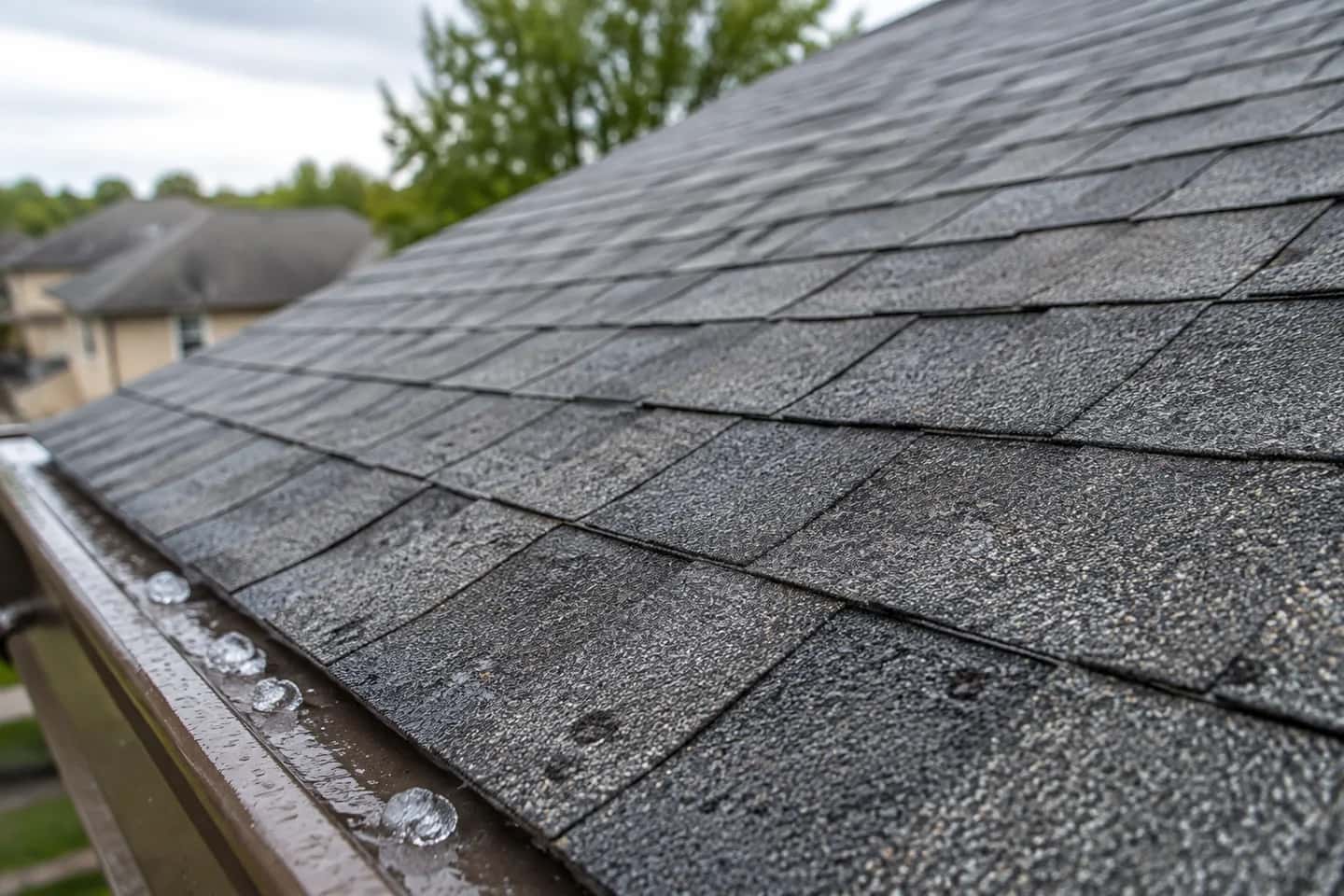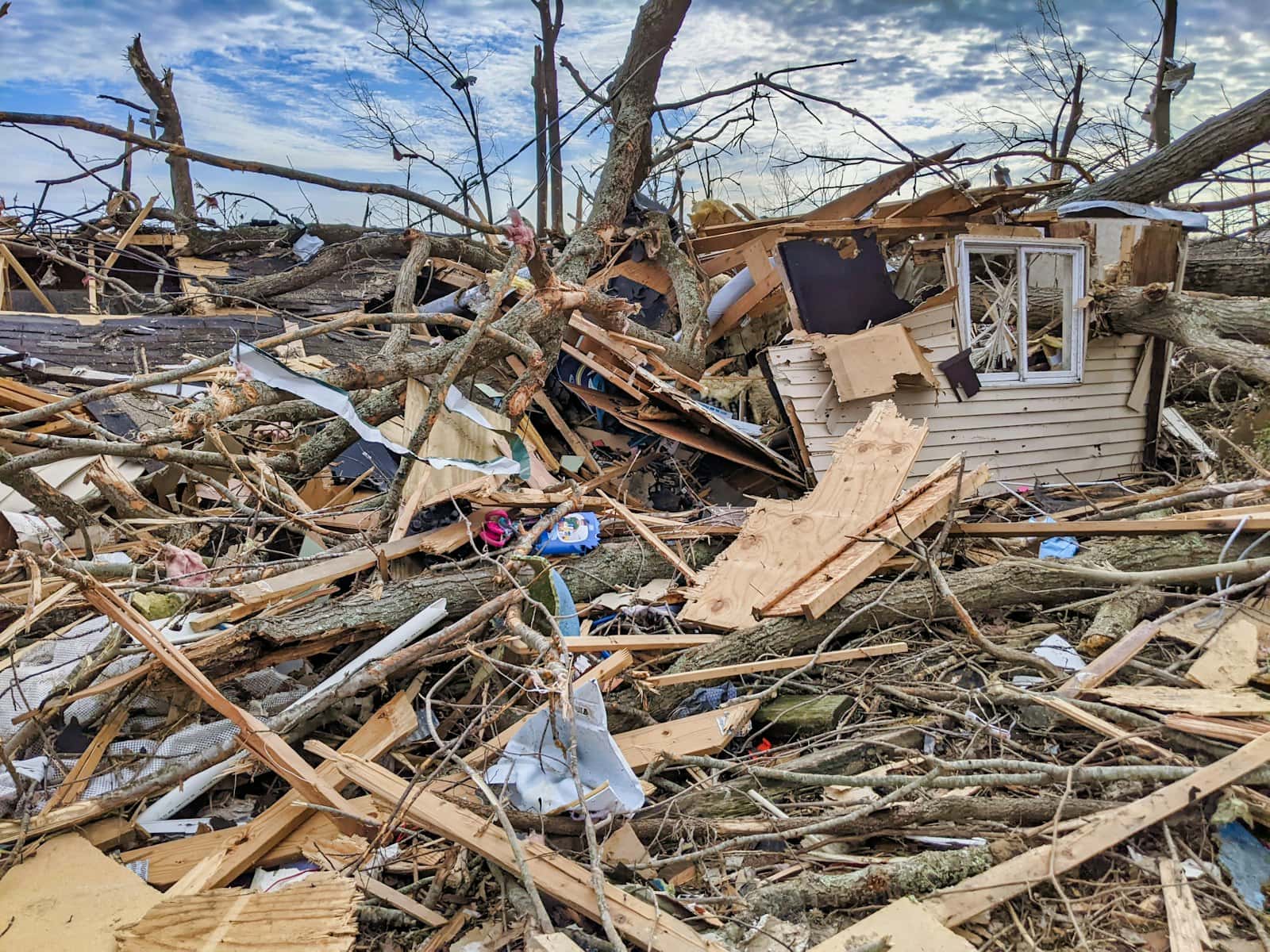
When hail hits your neighborhood, your insurance company has a financial incentive to close your claim fast, and a rushed inspection is one of the easiest ways to do that. A quick drive-by look, or worse, a settlement generated from satellite imagery with nobody ever setting foot on your roof, can miss the damage that actually matters. Hail damage is often invisible from the ground and even hard to see from a ladder at the eave. If your insurer wants to settle in days instead of weeks, that speed should make you more suspicious, not less.
How hail actually damages different roofing materials
Hail does not damage every roof the same way, and understanding the mechanics helps you evaluate whether an adjuster's writeup makes sense. On asphalt shingles, a hailstone strike bruises the mat beneath the surface granules. That bruise can fracture the fiberglass mat, which breaks the shingle's ability to shed water, meaning it is functional damage that needs repair. Surface granule loss with no mat fracture underneath is usually treated as cosmetic, since it affects appearance more than performance, though enough granule loss over time accelerates UV degradation and shortens the roof's life.
Metal roofing responds differently. Hail dents metal panels rather than fracturing a mat, and most manufacturers and roofing associations treat cosmetic denting on metal as just that, cosmetic, unless the dent has compromised a seam, fastener, or protective coating. Tile roofing is different again: hail cracks or chips clay and concrete tiles, and a cracked tile is a functional problem because it can let water infiltrate the underlayment, even if the crack looks minor from the ground.
This is why a single, generic "hail damage" standard applied across every roof type in a neighborhood is a red flag. Your roofing material determines what "damage" even looks like.
Why hail damage hides from a ground-level or drive-by inspection
A proper hail inspection means someone gets on the roof, not just someone standing in your driveway with binoculars. Adjusters and roofing inspectors walk the roof in a grid, dividing each slope into test squares, commonly 10 feet by 10 feet, and count qualifying impact marks inside each square. If nobody walks the roof and marks test squares, that count never happens, and there is no real basis for a damage determination either way, favorable or unfavorable.
Some insurers have shifted toward remote and aerial-imagery-based estimates to speed up claims after large hail events. Satellite and drone imagery can spot missing shingles or obvious storm debris, but it cannot detect a fractured mat under intact granules, and it cannot detect metal panel seam damage or hairline tile cracks. If your claim was evaluated this way and denied or lowballed, that alone is a reason to request an in-person, on-roof inspection.